Laser Engraving Plastics
Laser engraving on plastics allows precise and long-lasting surface marking, producing clear text, symbols, or graphic elements based on a digital layout. This method is most commonly used for marking, identification, and informational solutions where contrast and precise consistency are important.
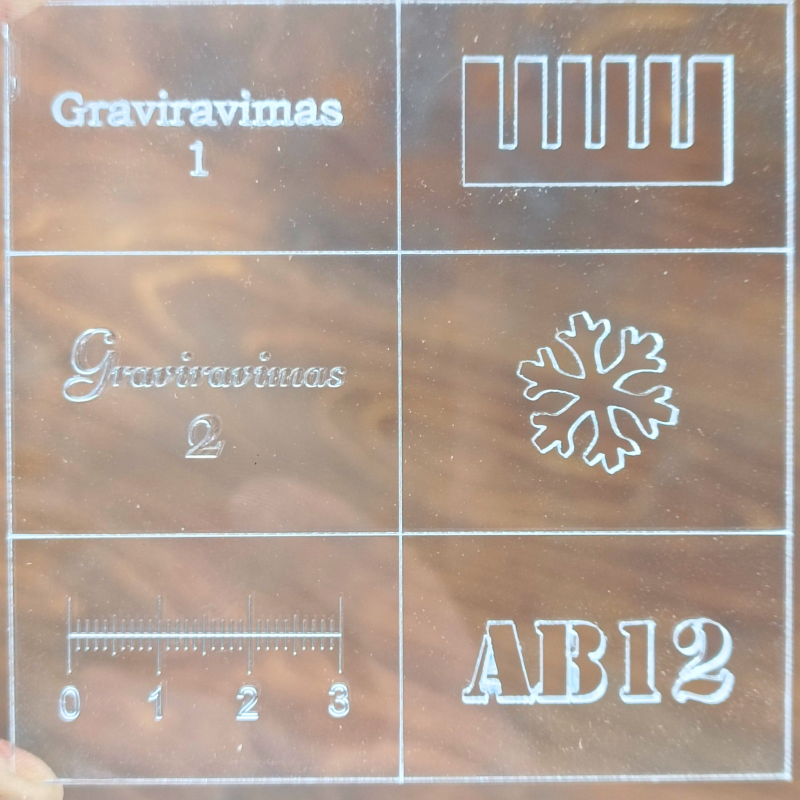
Engraving depth and surface appearance
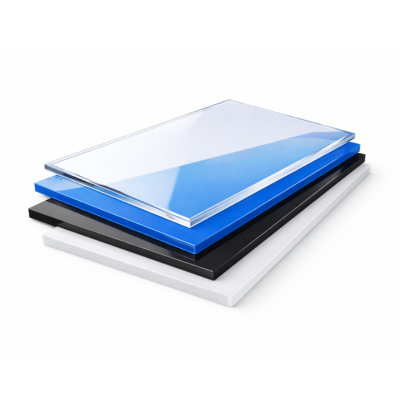
During engraving, the laser removes or alters the top layer of the plastic, so the image is formed based on contrast. Some plastics become lighter when engraved, others darker, and multilayer plastics allow especially high contrast results.
In some cases, focus adjustment (defocusing) is used, which allows a smoother engraving edge or softer visual transition, especially on coated or painted surfaces.
Plastic engraving is performed using provided vector or raster files (DXF, SVG, PDF, JPG, PNG). Before engraving, we evaluate the plastic type, surface properties, and design detail to select appropriate engraving parameters and achieve a clear, repeatable result.