Laser Engraving Leather
Laser engraving of leather allows precise and long-lasting marking of natural or synthetic leather surfaces, producing clear text, patterns, or graphic elements. This method is particularly suitable for custom products, marking, and decorative solutions where detail and an aesthetic result are important.
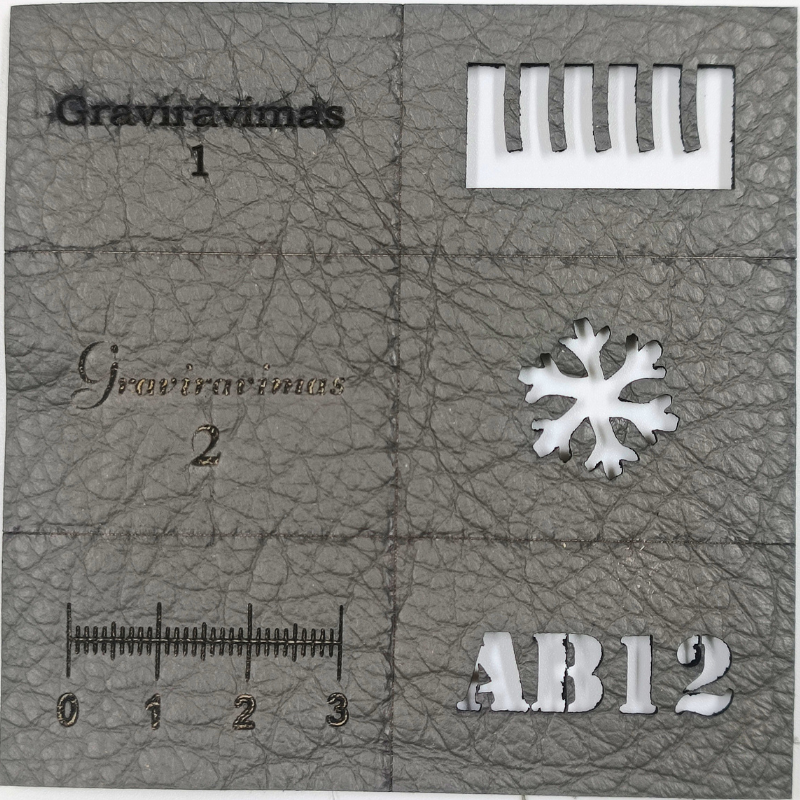
Engraving depth and surface appearance
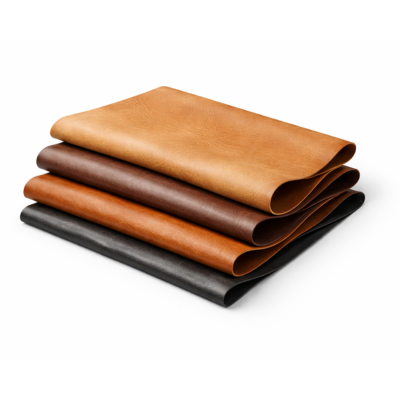
During engraving, the laser removes or darkens the top layer of leather, forming the image based on contrast. On natural leather, the engraved area usually darkens, while on synthetic leather the color may change or the underlying layer may be exposed.
Contrast and the final appearance depend on the leather color, surface coating, and engraving settings. If a cleaner surface is required, protective measures may be used before engraving to reduce soot deposition.
Leather engraving is performed using provided vector or raster files (DXF, SVG, PDF, JPG, PNG). Before engraving, we assess the design detail, leather type, and surface properties to achieve a clear, repeatable result.